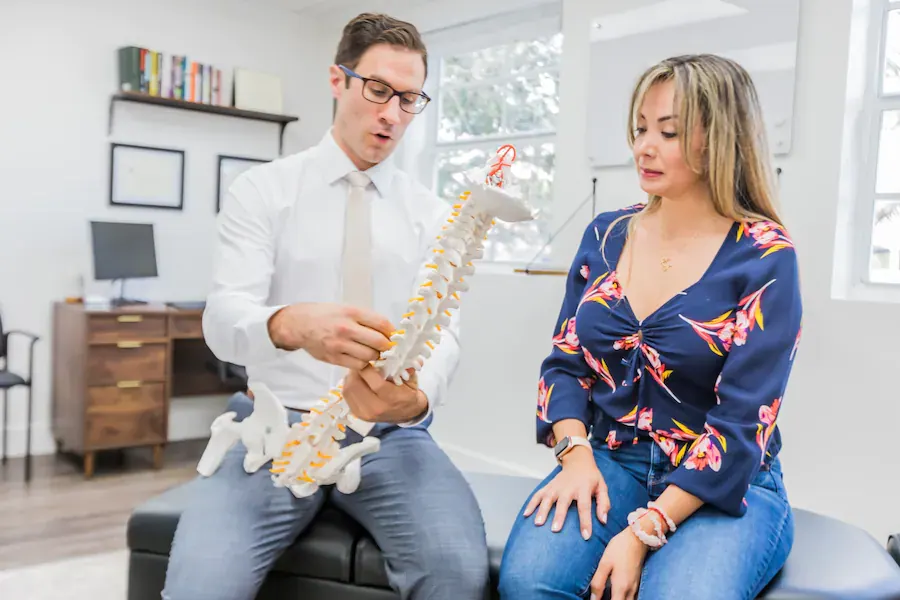
In this episode of the Freedom Family Chiropractic podcast, Dr. David Ridos explores one of the most common yet overlooked health challenges affecting people today — insufficient movement. Whether you consider yourself athletic or not, your body constantly sends signals when it's not getting the motion it needs to function at its best.
Dr. Ridos breaks down the key physical warning signs that indicate your body is craving more movement, from stiffness and fatigue to other subtle cues you might be dismissing. Coming to you from Weston, Florida, this episode is packed with practical insight to help you understand your body better and take action.
Tune in to learn how small changes in your daily movement habits can make a significant difference in how you feel — and why it matters for your long-term health and well-being.
Transcript
Hey there, and welcome back. I'm doctor David Ridos, and you're listening to the Freedom Family Chiropractic podcast, coming to you from right here in Weston, Florida. Today we're talking about something that affects just about every single person listening right now — and that's movement. Specifically, the signs your body gives you when it's not getting enough of it.
Now, I know what you might be thinking. I'm not an athlete. I don't need to worry about that. But here's the thing — this isn't about fitness. This is about your body functioning the way it was designed to function. And when it's not getting enough movement, it starts sending you signals. The question is, are you listening?
Let's start with one of the biggest ones I see in my practice every single week — stiffness. You know that feeling when you wake up in the morning and you just feel... locked up? Or you've been sitting at your desk for a couple of hours and standing up feels like a whole production? That stiffness is your body telling you something. Our joints and muscles are designed to move. They stay lubricated, nourished, and healthy through motion. When we sit still for long periods — and most of us are sitting way more than we realize — that system starts to slow down. The tissues get tight. The joints lose their range of motion. And over time, that stiffness becomes your new normal. It doesn't have to be.
Here's what's interesting — another major signal is fatigue. And I don't mean just being tired at the end of a long day. I mean that heavy, dragging kind of tiredness that shows up even when you've slept. A lot of people are surprised to hear this, but gentle, consistent movement actually increases your energy levels. When your muscles and joints are moving the way they should, your circulation improves, your nervous system functions better, and your whole body just runs more efficiently. When we stop moving, everything starts to feel sluggish — including you.
And then there's the aches. The low back that nags at you. The neck that never quite feels right. The hips that feel tight all the time. These aren't always dramatic injuries. Very often, they are the result of the body sitting in the same position, day after day, without enough variation in movement to keep things balanced. Your spine especially — it was built to bend, rotate, flex, and extend. When it only does one thing all day long, something is going to start complaining.
So what can you do starting today? Keep it simple. Set a timer and get up every forty-five minutes to an hour. Just stand, walk around, roll your shoulders, take a few deep breaths. That alone makes a real difference. Try to get outside and walk — even ten or fifteen minutes a day adds up over time. Gentle stretching in the morning before you check your phone is another easy win. You don't need a gym membership or an hour-long workout. You just need to move more consistently throughout your day.
Now, here's when I'd encourage you to come in and see us. If the stiffness, the aches, or the fatigue have been hanging around for more than a few weeks — or if you're noticing that your range of motion is getting worse rather than better — that's a great time to get evaluated. Sometimes there's an underlying issue with the spine or joints that's making it harder for your body to respond to movement the way it should. That's exactly what we look at and address at Freedom Family Chiropractic. We want to help your body move better, feel better, and function at its best — whatever your age, whatever your activity level.
Your body is remarkably good at healing and adapting when it has what it needs. And one of the most powerful things you can give it is consistent, intentional movement.
Thanks so much for tuning in today. If this resonated with you, share it with someone who might need to hear it. And if you're in the Weston area and you're ready to take that first step, give us a call or visit us at Freedom Family Chiropractic. I'm doctor David Ridos, and we'll see you next time.